What to eat in Calabria? If you’re about to get off at the Colour Fest 14 — running from’11 to 13 August 2026 a Lamezia Terme, on the Falcone and Borsellino promenade, the Riviera of Sunsets — this is one of the best things about the trip. Calabrian cuisine is live, spicy and based entirely on the raw material: ‘nduja, fileja, red onion from Tropea e chilli These are just the beginning. This guide takes you on a journey through the dishes, produce and wines you simply mustn’t miss, with a special focus on the flavours of the Lametino, that is, the one you’ll find just a few steps from the stage.
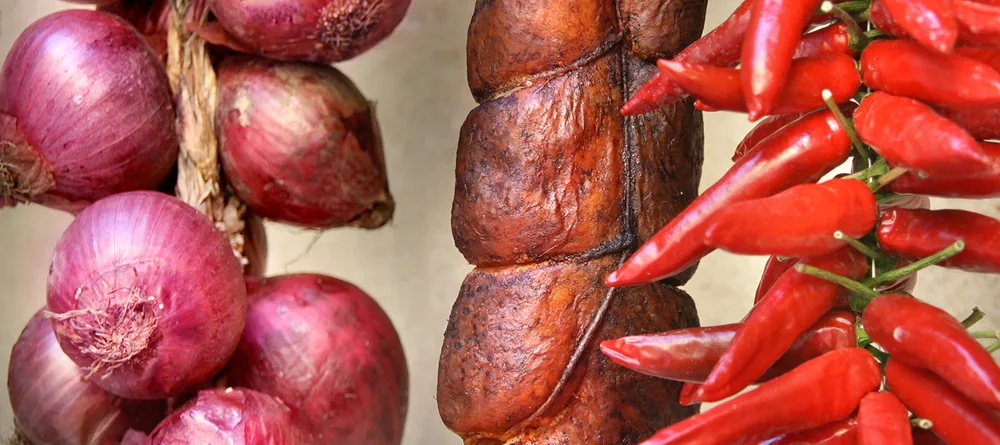
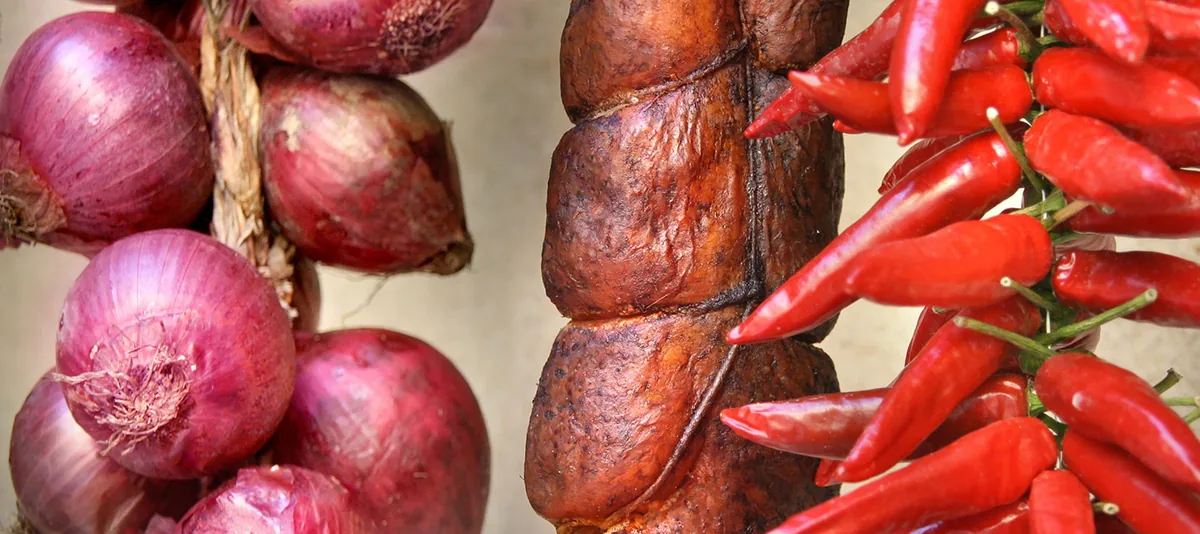
La ‘nduja It is the best-known Calabrian product in the world: a spreadable cured meat with a creamy texture and a pleasantly spicy flavour. The benchmark for quality is the ‘Spilinga ‘nduja, a small town in the province of Vibo Valentia has become the “capital” of this cured meat. The traditional recipe combines three cuts of pork — lard, cheek e bacon — with the Calabrian chilli sun-dried and salted, before being stuffed into casings and slowly smoked.
Its origins are a matter of debate: some trace it back to the Spaniards of the late 16th century — in Spain there is the sobrasada from Majorca, a close relative — others in the early nineteenth century. The name itself is said to refer to the’andouille French. How to enjoy it? Spread on warm bread, spread over the pasta, inside the pizza or to round off a cheese platter. Just one word of warning: it’s not for the faint-hearted.
La fileja It is a fresh pasta shaped like a rolled-up vermicelli, made from water e refined semolina and shaped around a thin wire frame. It is the Vibonese version of the maccheroni al ferretto, which in Calabria vary from town to town. The classic sauce is with goat ragù: rich, hearty and fragrant, a traditional peasant dish that captures the essence of the countryside. In the Lametino The same ‘pasta al ferretto’ is often served with goat’s meat, or ‘pasta con le sarde’, made with breadcrumbs from the bread from Lamezia.
La Tropea red onion PGI It is one of Italy’s most beloved specialities: so sweet, crunchy, white on the inside and red on the outside. Its sweetness comes from the sandy soils of the coast and a lower pyruvic acid content, which makes it less tart and very easy to digest. It has been cultivated for over two thousand years — tradition has it that it was first brought here by the Phoenicians — and from the 2008 bears the mark PGI. It’s incredibly versatile in the kitchen: raw in a salad, caramelised, in an omelette with the queues, in vinegar or sautéed in a pan with chilli as a starter. If you’re passing by Tropea or from a local market – it’s up to you.
On the Tyrrhenian coast and in the Strait of Messina the swordfish It’s the king of the table. Give it a go on the grill, as rolls (the famous swordfish rolls with olives and capers), or in the modern version of the tartare with ‘nduja, where spicy flavours meet the sea. Alongside the swordfish, you’ll find anchovies, dolphinfish, squid and the catch of the day: all strictly local. It’s the perfect way to lighten things up after heartier dishes, whilst still staying true to the local flavour.
Just a stone’s throw from the festival, the Lametina cuisine It has its own distinct identity. Its flagship product is the’Lametia PDO extra virgin olive oil, produced from the cultivar Carolea, delicate and perfect eaten raw. Don’t miss the bruised branches, crushed olives seasoned with garlic, chilli and wild fennel – one of the region’s most traditional preserves. Among the dishes, the a tangled mess, the meatballs, stuffed aubergines and pasta with sardines. As for the products, the Lametino It is a land of beans, figs, liquorice e Lamezia DOC wines, whilst from the neighbouring Serrastretta The chestnuts are arriving, still dried as tradition dictates.
Heading up towards the Silathe Caciocavallo Silano PDO It is the iconic cheese: a matured, stretched-curd cheese, truly extraordinary charcoal-grilled. The morzeddhu (or morzello), a dish made from leftovers consisting of veal offal cooked for a long time in a spicy tomato sauce and served inside the pitta, the soft, round bread. These are “humble” dishes in the noblest sense of the word: created to ensure nothing went to waste, they have come to define a region’s identity.
Calabria’s iconic dessert is the truffle of Pizzo, an artisan ice cream first produced in the 1960s in Lace, on the Coast of the Gods: a hazelnut and chocolate centre with a dark chocolate filling, dusted with cocoa powder. It was the the world’s first ice cream to be awarded PGI status. Alongside him, the confectionery tradition offers:
When it comes to wines, the best-known Calabrian wine is the Cirò DOC, made mainly from indigenous grapes Gaglioppo: warm, intense, with a rich colour, available in red and white. Whilst you’re at the festival, it’s worth looking out for the Lamezia DOC wines in the region. Among the absolute top players is the bergamot from Reggio Calabria, a citrus fruit unique to the Ionian coast of Reggio, which you must try in liqueur, freshly squeezed juice or in desserts. Finally, the craft beer scene Calabresi is booming: look for it in bars and clubs on the Lamezia seafront, perhaps whilst you’re waiting for the concerts to start.
During the Colour Fest 14 You don’t have to go to great lengths to eat well. On the Falcone and Borsellino promenade you’ll find seafood restaurants, pizzerias and street food Calabrian, whilst the Colour Market Inside the festival grounds, there’s food, crafts and local produce on offer. A typical day? Breakfast with a coffee and a pistachio croissant, a light lunch of swordfish, an aperitif at sunset with ‘nduja and Tropea onions, dinner before the live show and — to round it all off in style — a truffle of Pizzo under the stars. To find out what else there is to do apart from music, have a look at our guides on what to do in Calabria and on the’summer in Calabria.
The most representative product is the ‘Spilinga ‘nduja, the spicy, spreadable cured meat that has become a symbol of Calabria around the world. Among the first courses, the fileja with goat’s ragù is one of the finest examples of this tradition, whilst the Tropea red onion PGI It is the region’s iconic vegetable.
In Lametino You can’t miss the’Lametia PDO olive oil (Carolea cultivar), the bruised branches (crushed olives with garlic, chilli and fennel), ‘pasta al ferretto’ with goat’s cheese, and pasta with sardines. Local specialities include beans, figs, liquorice and Lamezia DOC wines.
The chilli It’s a star of the show, but not everything is spicy. There are plenty of fish dishes, the’extra virgin olive oil, cheeses such as the caciocavallo silano and the sweet Tropea onion They have delicate flavours. You can usually ask for the less spicy version.
The truffle of Pizzo, artisan ice cream created in Coast of the Gods and the first in the world to obtain the’PGI. Alternatively, try zippole, mostaccioli, chocolate-coated dried figs and the a tangled mess.
Yes. The Colour Market within the festival grounds, it offers street food and local produce, and all the Falcone and Borsellino promenade It’s full of seafood restaurants, pizzerias and bars where you can sample Calabrian specialities before and after the concerts.
Three days of independent music by the sea, with a line-up which brings together Italian and international names — from Apparat a Django Django, from C'mon Tigre a Sebastien Tellier — and a land that tells its story through its cuisine. Tickets start at 39 euros and the three-day subscriptions are sold out: it’s best not to wait. For those who want to stay the night, the Camping Ulisse è sold out for the 12 and 13 August, but the Lido La Baia (from 60 euro).
👉 Discover all the line-up 2026 and book your place on the Riviera of Sunsets. Color Fest XIV — 11, 12 and 13 August 2026 — Lamezia Terme — Calabria. Summer on a Solitary Beach.
 Italian Italian
  English
 French
 Spanish
 German