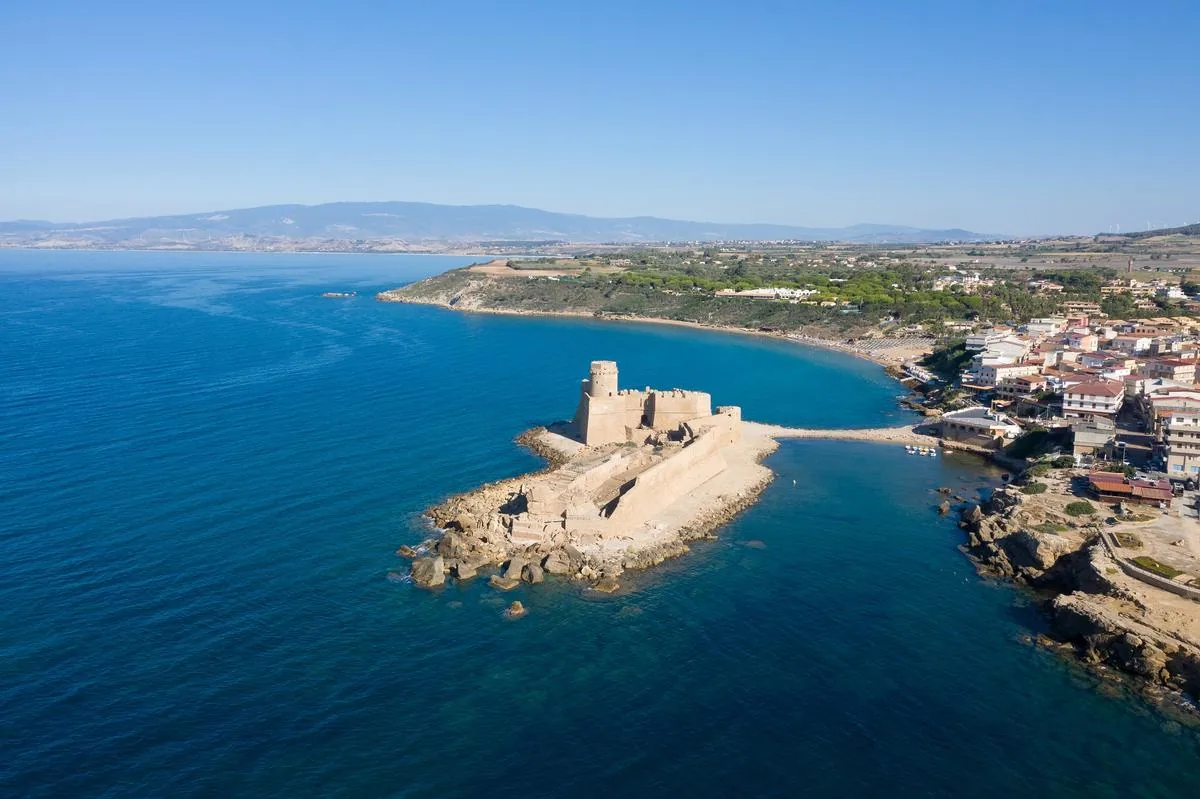
I villages to visit in Calabria They are among the most beautiful in Italy and are spread across three different landscapes: the Tyrrhenian coast, the Ionian coast and theinland Apennine. This guide suggests a 3-day itinerary based at Lamezia Terme, designed for those coming to the Colour Fest 14 and wants to extend their trip by exploring Norman cathedrals, Byzantine chapels and villages perched above the sea. The festival takes place on the’11, 12 and 13 August 2026 on Falcone and Borsellino promenade, the Riviera of Sunsets: three days of concerts and three days to explore the region.
Lamezia is the ideal starting point for this tour: it is situated almost in the centre of the region, has an international airport and is just a few hours’ journey from both the Tyrrhenian whether it is the Ionian Sea. The three routes described below can all be completed in a day, either returning in the evening or staying overnight along the way. Here’s how to organise them.
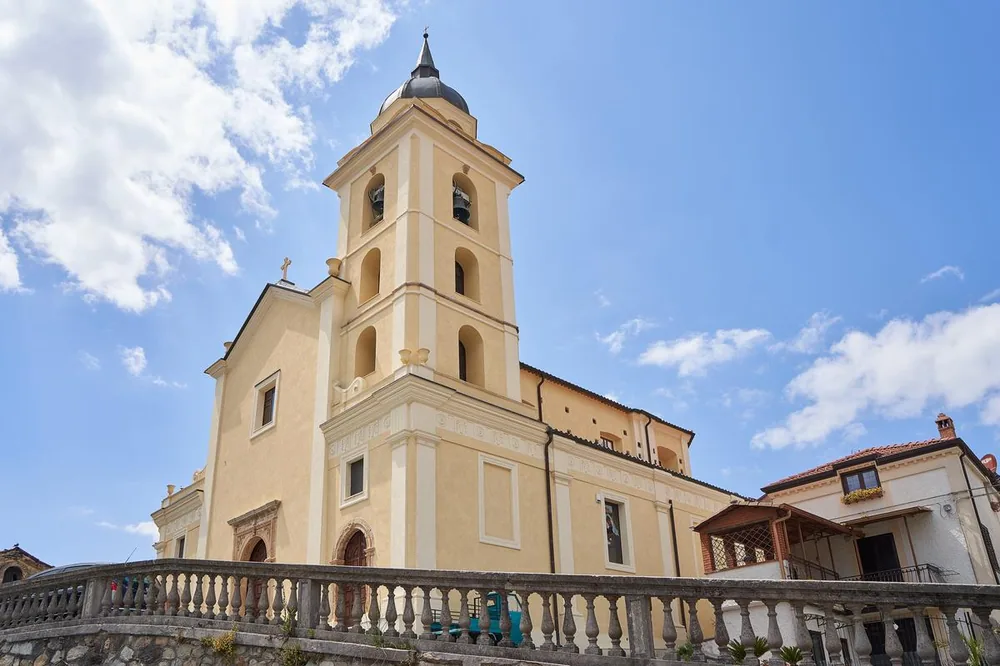
The first day is devoted to Coast of the Gods, the stretch of Tyrrhenian coastline running from Lace a Nicotera and it is one of the most spectacular in the Mediterranean. It starts from Lamezia heading south. First stop Pizzo Calabro, perched on a tuff cliff overlooking the Tyrrhenian Sea: here you can visit the Aragonese Castle, where he was imprisoned and shot Joachim Murat, King of Naples, and the famous is enjoyed in the square truffle of Pizzo, artisan chocolate and hazelnut ice cream with PGI status.
We continue towards Tropea, nicknamed the The Pearl of the Tyrrhenian Sea. The historic centre, with its circular layout, overlooks the sea from five panoramic terraces: the most picturesque is the’The Balcony of Sighs, at the end of Corso Vittorio Emanuele. Below, on a rocky outcrop, the Shrine of Santa Maria dell'Isola dominates the Rotunda Beach, one of the most photographed in Italy. When it comes to food, don’t miss the Tropea red onion PGI. Lunch in the city centre, then in the afternoon we head down to Capo Vaticano, in the municipality of Ricadi: coves with white sand and water as clear as in the Caribbean, with the beaches of Caves e Tone. From Lighthouse Viewpoint, at a height of 124 metres, on clear days you can see the Strait of Messina and the Aeolian Islands: the perfect spot to watch the sunset, before heading back to Lamezia in the evening.
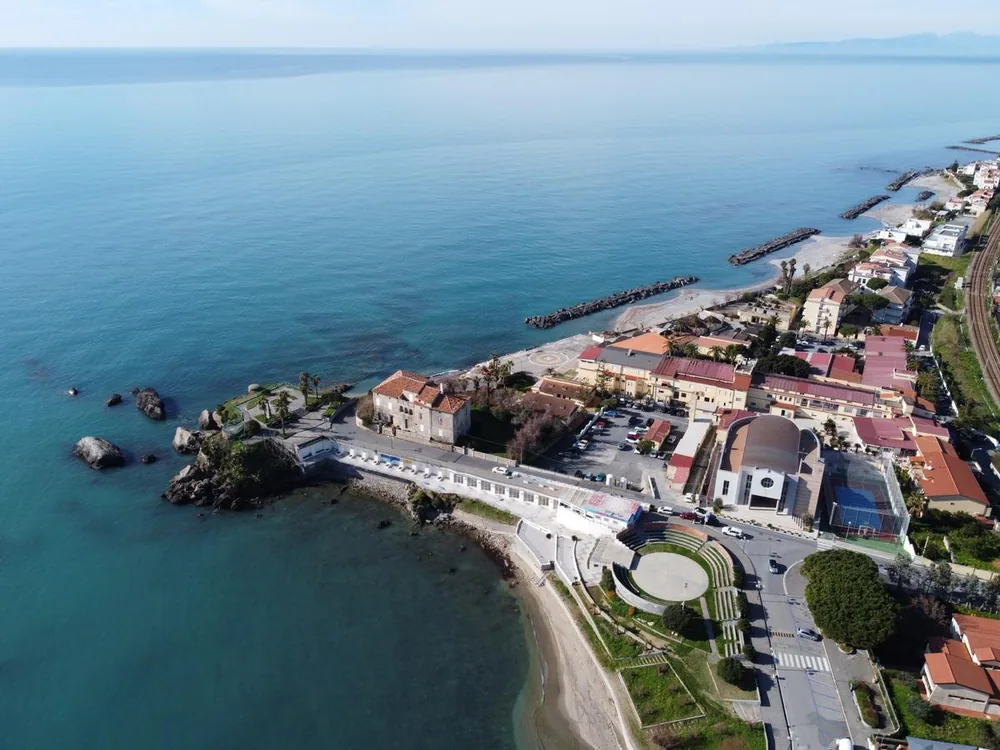
On the second day, the landscape and atmosphere change completely: we move on to the ion, rougher and wilder, where the villages tell the story of the long season Byzantine e Norman in Calabria. First stop Gerace, a Norman town perched 500 metres above sea level and nestled amongst Italy’s Most Beautiful Villages. The heart of the village is the Cathedral, consecrated in the 1045: at 1,690 m², it is the largest in Calabria, built partly on bare rock and supported by a Byzantine crypt in the shape of a Greek cross with twenty-six columns. All around are narrow streets lined with craft shops and stately homes, and the 16th-century Gate of the Sun and the remains of the Norman castle.
We continue towards Stylus, the City of the Sun which was the birthplace of the philosopher Tommaso Campanella. Here you will find the Cattolica di Stilo, a small Byzantine chapel built between the 9th and 10th centuries on the slope of the Monte Consolino: Greek cross plan, red bricks, five small domes and frescoes depicting the Christ Pantocrator. Historians regard it as the finest example of Byzantine religious architecture in the region. The final stop is Bova, the cultural capital of Grecanica Calabria, which is also one of Italy’s Most Beautiful Villages: here, the elderly still speak the Greco-Calabrian, an archaic variant of Greek closely related to the dialects of Crete and Cyprus. Don’t miss the Co-cathedralthe San Leo Sanctuary and the Museum of the Greek-Calabrian Language. Overnight stay in Locri o Soverato.
On the last day, he heads up towards the’inland in the Apennines, where Calabria reveals its mountainous and tranquil side. First stop Soveria Mannelli, a hamlet of the Sila known for two outstanding features: the Leo Wool Mill, founded in 1873, the region’s oldest textile mill, now a design hub and corporate museum where the nineteenth-century looms can still be seen; and the publishing house Rubbettino, which prints a significant proportion of Italian books here. Lunch, then the afternoon in the Sila in its own right: the lakes Ampollino e Arvo, the centuries-old pine forests and the fresh air of the plateau, perfect for a break from the August heat.
If you have a fourth day available, you can venture further north, to the foot of the Pollino National Park, up to Civita: village arbëreshë (Italian-Albanian) one of the best-preserved in the region, with its characteristic kasbah-style houses, striking chimneys and the gjitonia, the neighbourhood of narrow streets and courtyards typical of Albanian culture. From here, you can reach the spectacular Raganello River with its gorges. I’m heading back to Lamezia In the evening, ready for the concerts.
Here is a summary of the stops over the three days, which will help you plan your journey by car from Lamezia Terme:
A few golden rules to help you enjoy the itinerary without a hitch, especially in the height of summer. Car hire practically a must: the train only runs along the coast, and the most beautiful villages are in the hills or inland. Book now lunches and dinners at the trattoria beforehand, because at August The best places get booked up quickly. Visit the villages in the early morning or at sunset, never in the middle of the afternoon: it’s very hot and the flat light makes for poor photos. Bring comfortable shoes, because almost all historic centres consist of stone stairways and narrow streets.
One final tip regarding the timetable: the three days described here coincide perfectly with the three evenings of the festival. You can spend the morning and early afternoon exploring the villages and then head back to the Falcone and Borsellino promenade for the evening concerts. To find your way round the dates, stages and guests, check out the Complete line-up of the Color Fest 2026; if, on the other hand, you’re looking for ideas for the rest of your stay, the guides are useful what to do in Calabria e On the Calabrian summer.
Among the most representative are Tropea e Lace on the Tyrrhenian Sea, Gerace, Stylus e Bova on the Ionian Sea, and Civita at the foot of Mount Pollino. Several of these form part of the circuit of Italy’s Most Beautiful Villages and tell the story of the region’s Byzantine, Norman, Greek and Arbëreshë history.
Yes. Based on Lamezia Terme You could spend one day on the Tyrrhenian coast, one on the Ionian coast and one exploring the inland areas. It’s a busy itinerary but one that’s manageable by car, and ideal to combine with the three evenings of the Colour Fest 14 of the’11, 12 and 13 August 2026.
Essentially, yes. The train provides good connections to the coastal towns, but the most picturesque villages are situated in the hills or inland and can only be reached easily by cars. Car hire at the airport in Lamezia It is the most practical way to get about freely.
The most convenient base for the festival is Lamezia Terme. Among the options covered by the scheme are the Camping Ulisse (from 70 euro) and the Lido La Baia (from 60 euro). During this period, the Camping Ulisse is fully booked for 12 and 13 August, while the Lido La Baia There is still availability: it’s best to book your accommodation at the same time as your tickets.
Tickets start at 39 euros for a single day, with the option to choose the’Full subscription for all three evenings. The subscriptions are running out: anyone who wants to experience the whole festival on the Riviera of Sunsets should take action in good time on Ticketmaster.
Pairing the the most beautiful villages in Calabria at Colour Fest 14 It’s the best way to experience the region to the full: by day, Norman cathedrals, Byzantine chapels and sunsets over the Aeolian Islands; by night, independent and avant-garde music at the Riviera of Sunsets. The festival takes place on’11, 12 and 13 August 2026 a Lamezia Terme, on the Falcone and Borsellino promenade, with the slogan Summer on a Solitary Beach. The subscriptions are running out and the Lido La Baia This is the accommodation still available for the nights of the festival: it’s best to book everything in advance. Find out more about the full line-up And, if you love festivals by the sea, do have a look at the guide to Southern Italy Festival 2026.
Color Fest XIV - 11 / 12 / 13 August 2026 - Lamezia Terme - Riviera dei Tramonti - Calabria. Summer on a Solitary Beach.
 Italian Italian
  English
 French
 Spanish
 German